Mobile App Development Process: From Idea to Launch Step by Step
A clear, non-technical walkthrough of how a mobile app actually gets built — the six stages from first idea to live launch, and what happens (and what you decide) at each.
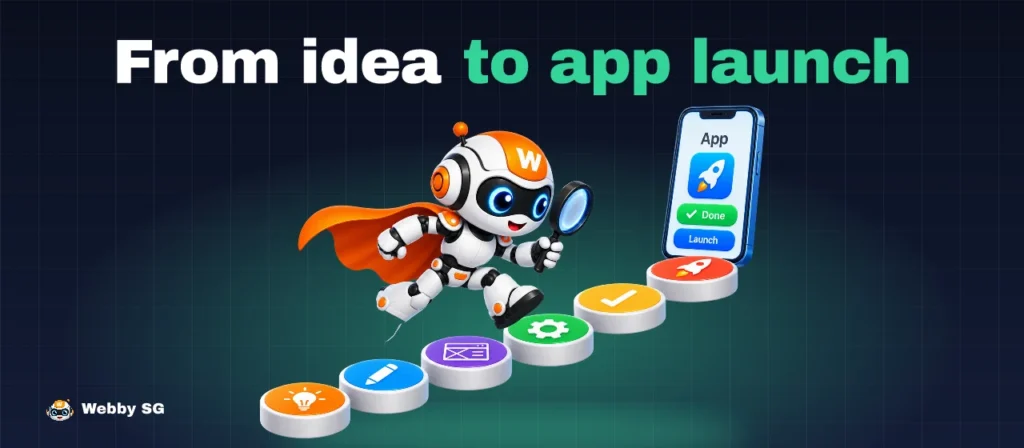
// KEY TAKEAWAYS
→App development is a sequence of six stages — skipping the early ones is what blows budgets and timelines.
→Discovery and design happen before any code; getting them right is cheaper than fixing later.
→Testing across real devices is not optional — it’s where quality is won or lost.
→Launch is the start, not the end — maintenance keeps the app working as platforms change.
For a business owner commissioning an app, the process can feel like a black box. It isn’t — it’s a clear sequence of stages, each with decisions you’re involved in. Knowing them helps you brief a team, judge progress, and avoid the surprises that derail app projects.
The six stages
Every well-run app build moves through these in order. Each stage feeds the next.
// THE APP BUILD, STAGE BY STAGE
1 · Discovery & scope
Define users, goals and the must-have first version.
2 · UX & UI design
Wireframe the flows, then design and prototype the screens.
3 · Development
Build the app front-end and the backend that powers it.
4 · Testing & QA
Test on real devices, fix bugs, tune performance.
5 · Launch
Submit to the App Store and Google Play and go live.
6 · Maintenance
Updates, OS compatibility, fixes and new features.
Why the early stages matter most
It’s tempting to rush to development — that’s the visible part. But changing a flow in a wireframe takes minutes; changing it in built code takes days and costs accordingly. The discovery and design stages are where you decide what the app is and how it works, cheaply. Teams that shortcut them end up rebuilding, which is slower and more expensive than doing it properly first.
Decisions get more expensive the later you make them. A feature cut during discovery costs nothing; the same feature removed after it’s built is wasted money. Invest in getting the plan right before the code starts.
Testing is where quality lives
Singapore users are on a huge range of devices, screen sizes and OS versions. An app that works on the developer’s phone can break on a customer’s. Proper testing across real devices — not just an emulator — is what separates an app that feels solid from one that frustrates and gets uninstalled. It’s the stage cheap builds quietly skip.
Launch is the beginning
Going live isn’t the finish line — it’s where real users start finding the edge cases, and where operating systems keep evolving underneath you. A maintained app stays fast, compatible and improving; an unmaintained one slowly breaks. Plan the post-launch phase as part of the project, not an afterthought.
// FREQUENTLY ASKED
What are the stages of mobile app development?
Six: discovery and scope, UX/UI design, development, testing and QA, launch, and maintenance. Each feeds the next, and the early stages — discovery and design — are where the cheapest, most important decisions are made.
Why does the design stage matter before coding?
Because changing a flow in a wireframe takes minutes, while changing it in built code takes days. Getting the plan and screens right before development starts avoids costly rebuilds — teams that rush to code usually end up redoing work.
What happens after an app launches?
Maintenance: OS updates, bug fixes, security patches and new features based on how real users behave. Operating systems keep changing, so an app needs ongoing upkeep to stay fast, compatible and useful. Launch is the start of that phase, not the end of the project.