How AI Is Changing Web Design and UI/UX in Singapore
AI is reshaping how websites get designed and built — from first wireframe to personalised experience. What’s real, what’s hype, and what it means for a Singapore business commissioning a site in 2026.

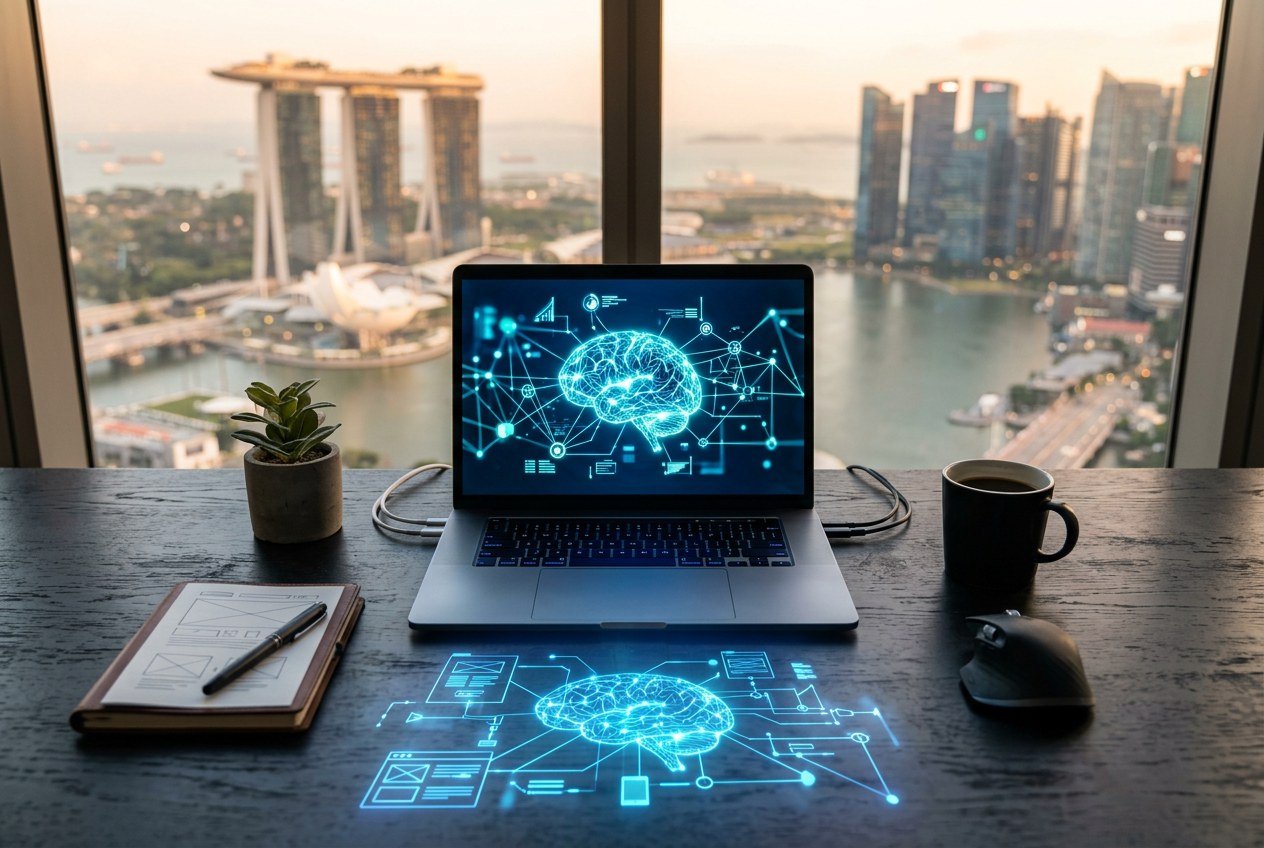
Web design is one of the fields AI has changed fastest. Tools can now generate layouts, write copy, produce imagery and even build rough sites from a prompt. For a Singapore business planning a website, that raises a fair question: what’s genuinely useful here, and what’s marketing hype? Here’s an honest look.
Where AI touches the design process
AI shows up across the workflow, but its value is uneven — strongest at speeding up production, weakest at the thinking.
Faster starting points, not finished sites
The clearest impact is speed at the front of a project. What used to be days of initial wireframes, moodboards and first-draft copy can now be hours, giving designers more options to refine sooner. But a generated layout is a starting point, not a finished site — it has no understanding of your business goals, your customers or what makes them convert.
The real frontier: personalised UX
The more interesting change is what happens after launch. AI makes it practical to adapt a site to each visitor — surfacing different content, offers or layouts based on behaviour and source. Done well it lifts conversion; done carelessly it adds complexity and privacy risk. For most Singapore SMEs it’s an edge to grow into, not a day-one requirement.
What it means when you commission a site
For a business hiring a web designer in 2026, AI mostly means faster iterations and lower production cost on the routine parts — which is good for you. But it makes the human judgement more important, not less: choose a partner for their strategy, taste and understanding of your customers, not for how much of the work they’ve automated. A site that converts is still designed, not generated.


