
Final Content Approval: Versions, Images and Publication
Make content approval specific to the final copy, images, destination and context. Keep factual review, scheduling and verified publication clearly defined.
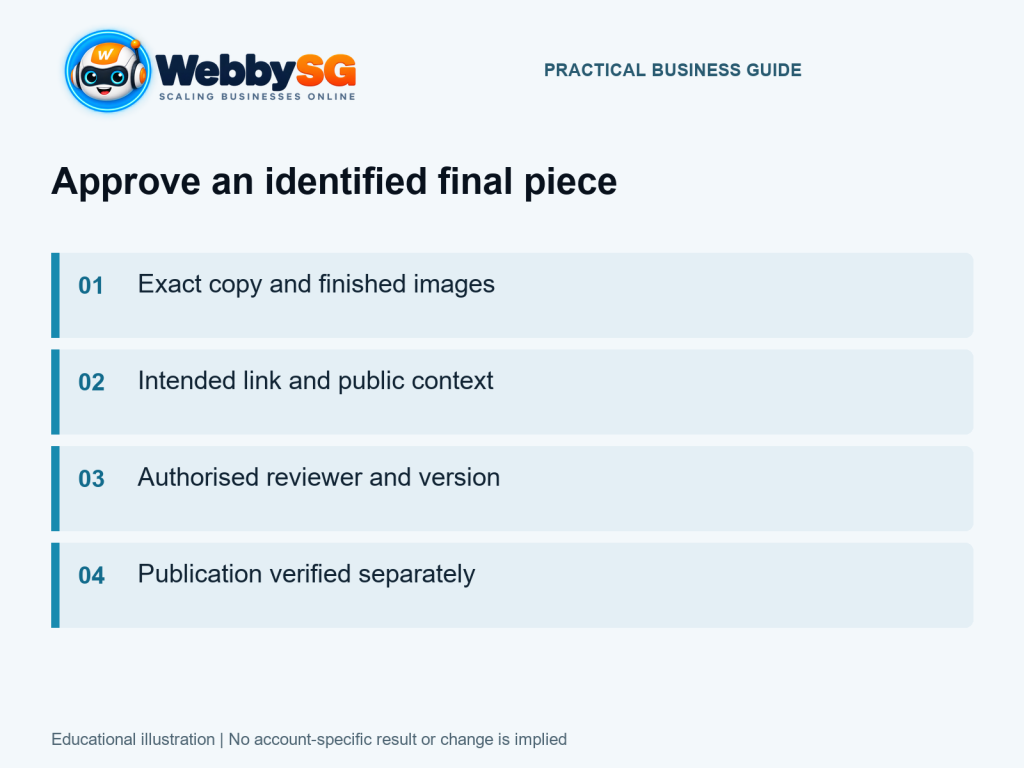
What should final content approval actually approve?
A final content approval workflow should identify the exact copy, images, destination and intended publication context that the authorised person reviewed. Keep factual corrections, stylistic preferences and publication decisions distinct. If the approved version changes materially, return the changed version for the relevant review rather than treating an earlier “looks good” message as unlimited permission.
Content can pass through several hands before appearing online. The writer may receive comments in a document, the designer may revise a graphic and the scheduler may use an earlier attachment. A useful content approval workflow resolves which finished version is ready for which action.
Webby's blog writing guide provides the article-production setting. This guide explains how a business can make approval concrete and reviewable; it does not establish that any existing content has permission to publish.
Separate three different review decisions
A factual reviewer confirms the truth and scope of relevant statements. An editorial reviewer considers clarity, tone and usefulness. A publication approver decides whether the identified finished piece may be released in the stated context.
One person may hold all three roles, but the decisions still differ. Someone correcting a product name has not necessarily authorised a campaign launch. Someone accepting a visual style has not necessarily verified a claim about delivery time.
Hootsuite's approval workflow guide describes review, revision, approval and publishing as separate stages. The practical value is making the current stage visible rather than assuming that feedback automatically advances the piece.
| Decision | What the reviewer needs | Useful recorded outcome |
|---|---|---|
| Factual | Exact statements and supporting evidence. | Confirmed wording or a specific correction. |
| Editorial | Complete copy and audience context. | Accepted text or actionable revisions. |
| Visual | Finished artwork at a readable size. | Accepted composition and labels. |
| Publication | Exact final version, destination and context. | Authorised release scope or a clear hold. |
Present a complete review package
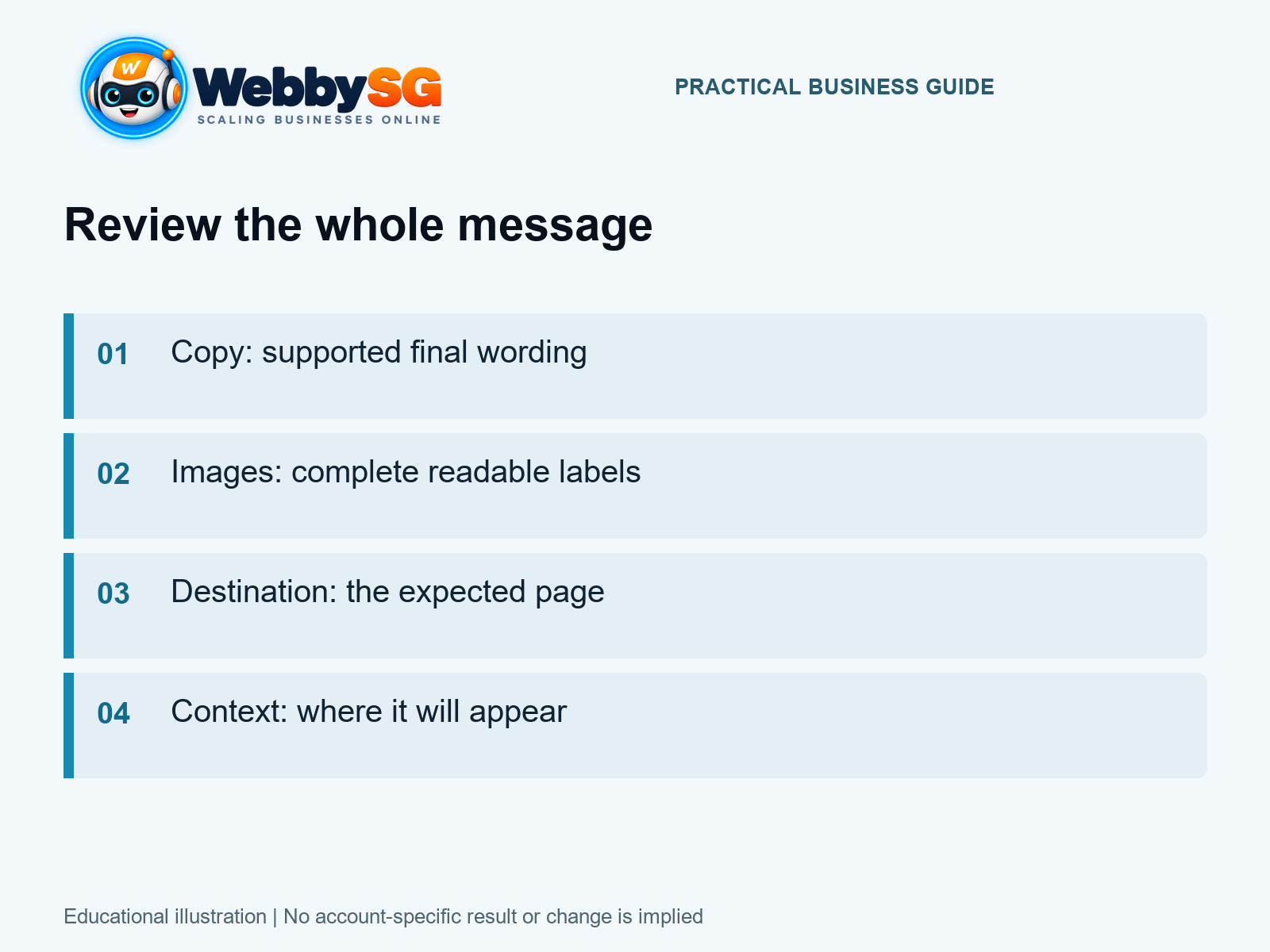
Give the reviewer the actual article or post, images, title, summary and intended link together. If the piece depends on a date or offer, make that condition easy to see. A reviewer should not have to assemble the finished message from several chat attachments.
For a social post, show how the image and caption work together. For an article, include its title, relevant metadata and embedded figures. A headline can imply a stronger promise than the carefully qualified body.
Webby's social media marketing information describes that channel context. The review package should suit the actual format rather than forcing every piece through a text-only document.
Make feedback precise enough to implement
Ask reviewers to identify the sentence or element that needs changing and explain the issue. “The stated service area is too broad” is actionable. “Make it more premium” needs a more concrete discussion before the writer can resolve it.
Separate required factual corrections from optional style preferences. If several reviewers disagree, name the person who resolves the decision. A designer should not have to guess which of two contradictory instructions represents the business.
A useful revision note can show the proposed replacement and why it addresses the issue. The business reviews that concrete wording rather than being asked to invent the content itself.
Bind approval to the finished version
Give the final version a clear identity through the content system or another reliable record. Retain who approved it, when and for what intended action. The aim is to avoid uncertainty about which attachment or draft a message referred to.
For an educational example, an owner might approve a post explaining a service process. If a later edit adds a response-time guarantee, the earlier approval should not be stretched to cover the new commitment.
Not every typographical adjustment carries the same significance. Establish the business's revision policy, but ensure changes to facts, offers, meaning, assets or destination receive the appropriate renewed review. A convenient workflow should still preserve the approval's actual scope.
Keep scheduling separate from publication proof
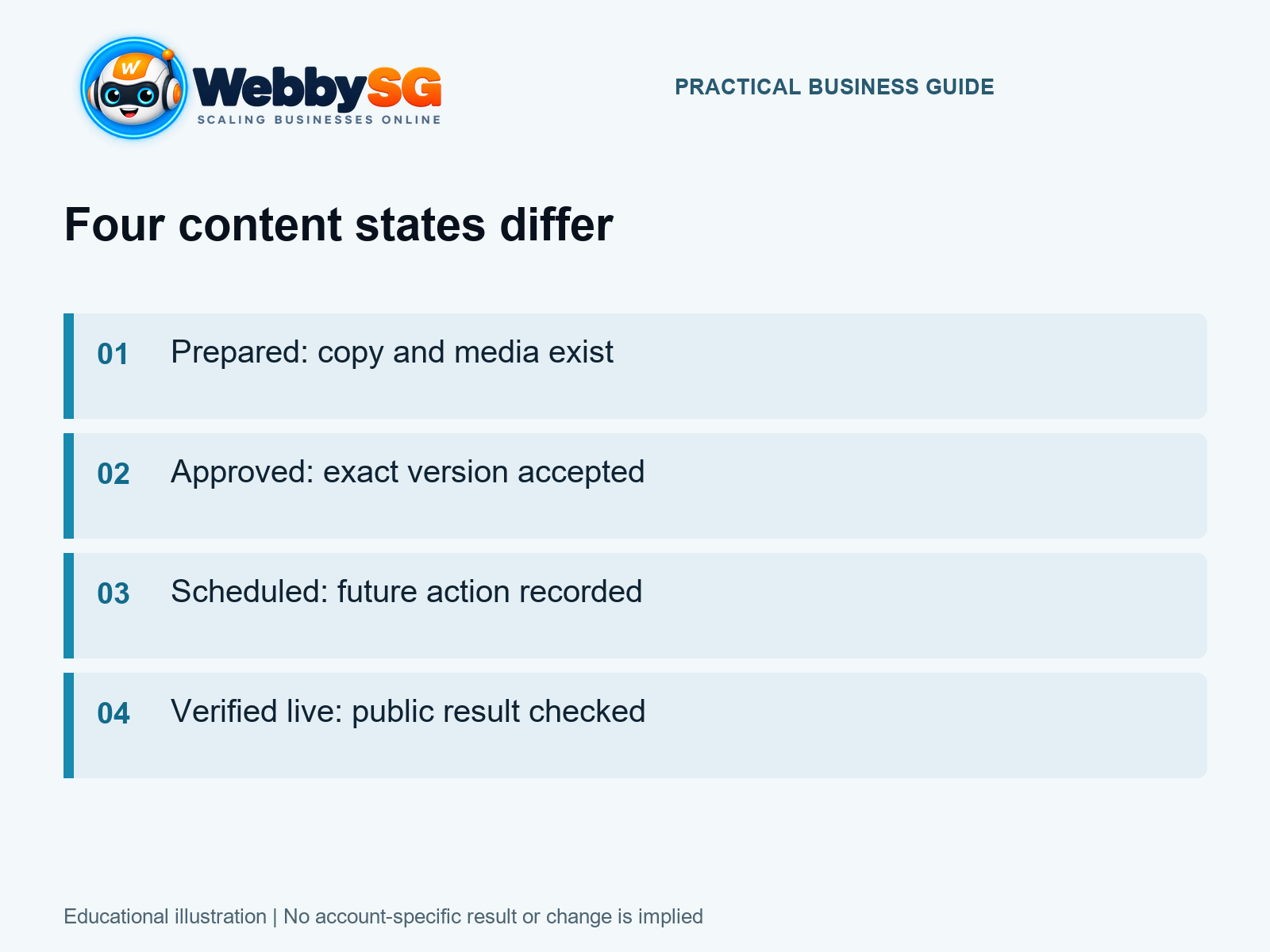
A scheduled piece is prepared for a future action. It is not evidence that the public page or post exists. Record the intended time and destination, then verify the actual result when publication occurs.
Bulk approval should still preserve each piece's identity and date. Selecting several articles together should not collapse their individual review records or make them all publish immediately. A changed item should not inherit another item's approval.
If the business uses paid distribution, Webby's social advertising information provides a separate context. Content approval and permission to incur advertising spend are different decisions that should be explicit.
Describe holds in ordinary language
A held piece should say what is missing and who can resolve it. Examples include an unconfirmed product fact, unclear image permission or an unverified destination. “Pending” alone does not help the next person progress the work.
Continue independent parts of preparation where appropriate, while preserving the hold. A designer can resolve layout issues while a business fact awaits confirmation, but the unfinished factual question must remain visible.
Verify the delivered version
After publication, compare the visible copy, images and destination with what was authorised. Check the actual public result rather than relying only on a successful submission message from a tool.
If something differs, preserve the evidence and identify the safest correction through the business's process. The useful completion record describes what is actually visible, any remaining issue and the action taken.
Handle a changed destination explicitly
A finished post may have accurate copy while its link has been changed to another page. Review whether the replacement destination fulfils the same promise and contains the expected current information. For example, a process explanation linking to an expired offer creates a different audience experience from the one approved. Retain the correct destination with the final version and check it during publication verification. Approval should describe the complete journey, rather than only the words displayed before the click.
Content approval questions
Does a factual correction authorise publication?
Not automatically. Confirm the authorised person's publication decision for the final identified version.
Can approval survive a material new claim?
The changed claim needs the relevant renewed review; do not assume earlier approval covers it.
Does scheduled mean published?
No. Verify the actual public result after the scheduled action.
What should a hold explain?
The specific missing fact or prerequisite, its owner and the next action needed to resolve it.